.png)

How many CAD/CAM materials does a modern dental practice really need?

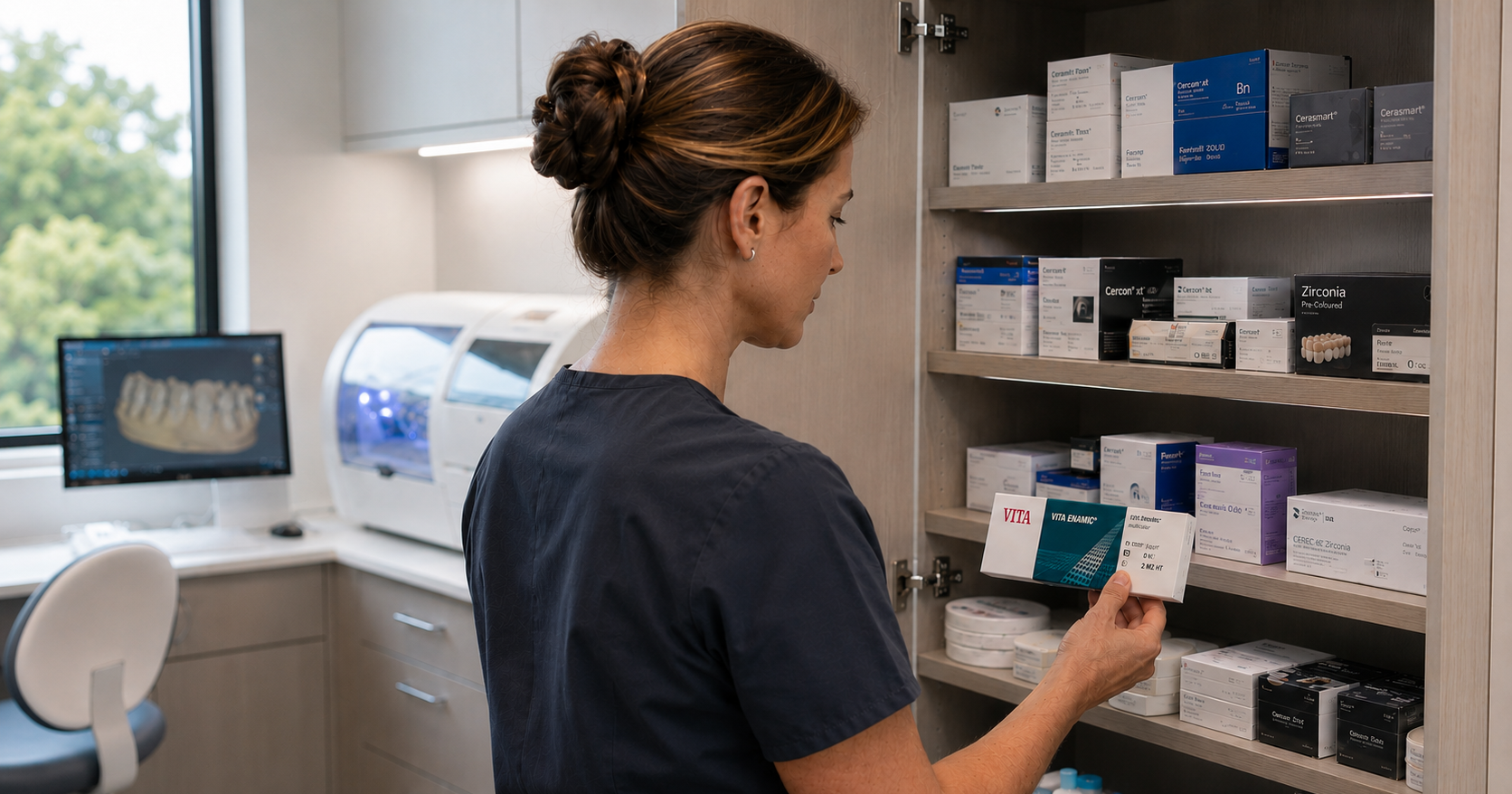
Today, there is a wide range of materials with different properties available for digital CAD/CAM restorations.
Does every clinical situation really require its own specific material, or can the majority of daily restorations be handled using just a few tried-and-true materials?
The reality in everyday practice
Most CAD/CAM restorations pursue similar therapeutic goals:
Preserve as much tooth structure as possible
Reliably restore function
Achieve reliable esthetics
Designing an efficient treatment plan
Whether it’s an inlay, onlay, partial crown or single crown, many of these restorations differ in design but place comparable demands on materials and workflow.
More CAD/CAM materials do not automatically mean more flexibility
A wider selection of materials generally expands treatment options.
However, at the same time, it increases the effort required for:
Material management
Inventory management
Training
Application safety
Process standardization
With every additional material, the demands on the entire team increase. Therefore, for many dental practices, the question is not only which materials are available, but also which materials are actually used on a regular basis.
Why many practices deliberately reduce their material portfolio
As experience grows, the focus often shifts away from having the widest possible variety of materials and toward determining which materials reliably cover the broadest range of indications.
The goal isn’t a separate material for every situation, but a clearly defined material strategy for the most common applications.
This approach can help simplify processes and make the digital workflow more consistent.
What makes a material suitable for daily use
In everyday practice, it’s often not individual properties that matter most, but rather how well a material can be integrated into recurring treatment procedures.
Relevant factors may include, for example:
Suitability for common indications
Support for tooth-preserving treatment concepts
Use in situations with limited space
Predictable clinical results
Integration into existing chairside workflows
The more of these requirements are met, the greater the potential for integrating the material into a standardized treatment concept over the long term.
Conclusion
Today, the focus has shifted. The question is no longer which material offers the highest performance, but rather:
Which material concept best supports the most common clinical requirements as efficiently as possible? This shift is precisely why a strategic review of the materials portfolio is becoming increasingly important.

Comments