.png)

Which material properties are truly critical in the chairside workflow?

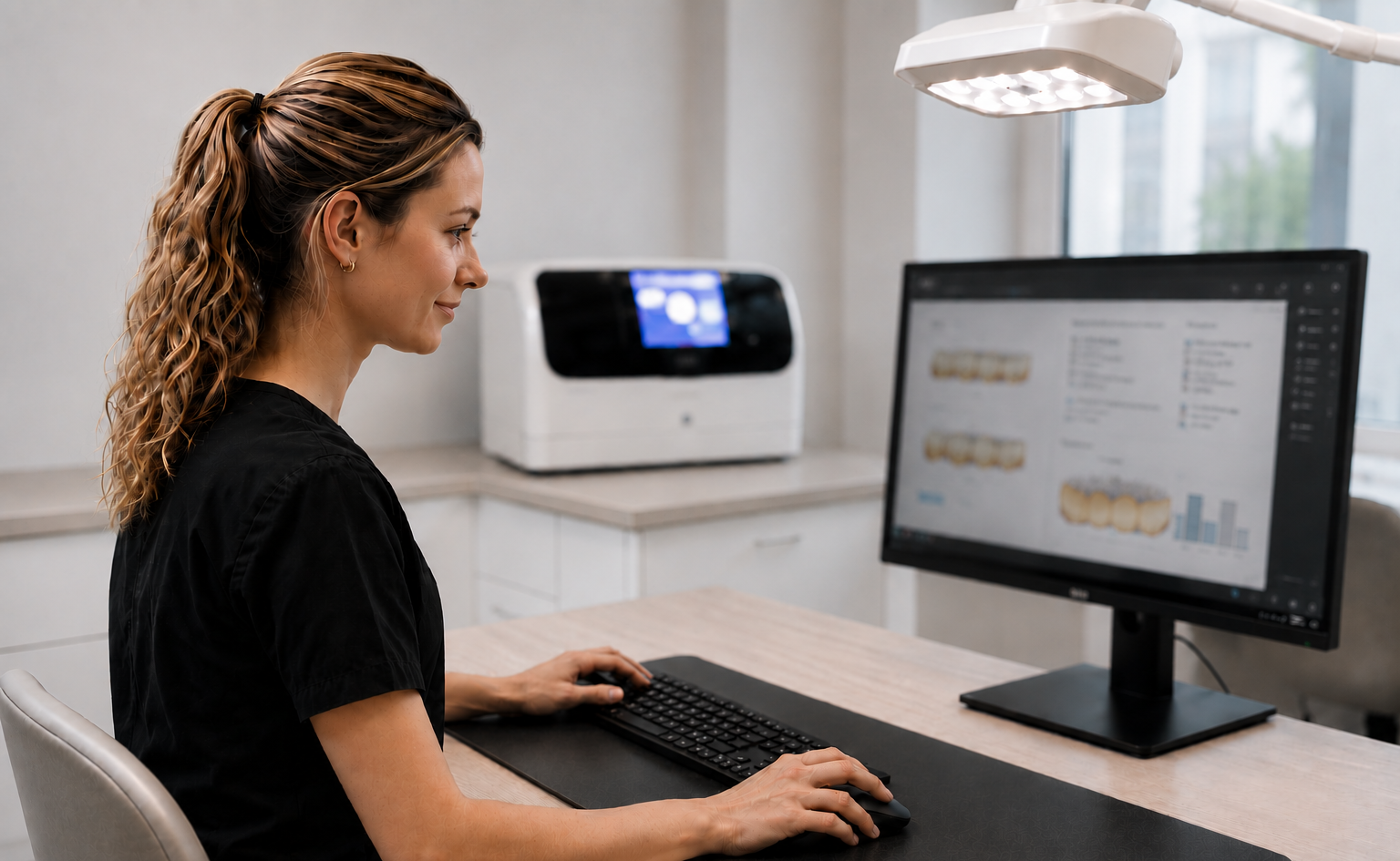
When selecting a CAD/CAM material, strength is often the primary consideration. While this is understandable, it is not enough. In the digital chairside workflow, clinical success and added value are not determined by a single metric. What matters most are material properties that support both clinical requirements and the workflow in the dental practice.
Strength is important-but not the sole determining factor in your material workflow
A strong material can only reach its full potential if the clinical situation, the relevant material properties, and the design are all well-matched. For this reason, strength should always be evaluated in light of the specific case and the functional load.
Why a balanced property profile can be relevant
Some modern material concepts focus on a balanced property profile rather than solely on maximum strength. Depending on the indication, properties such as elasticity, edge stability, processability, minimum layer thickness and the adhesive protocol may be more clinically relevant than maximum strength values.
Tooth-preserving approaches are gaining importance
The long-term preservation of natural tooth structure is becoming increasingly important. As a result, the focus is shifting toward materials that can be integrated into minimally invasive preparation approaches. The choice of material is thus becoming more of a strategic question: Which material supports the desired therapeutic approach?
Workflow integration becomes a selection criterion
In everyday practice, a material must not only be technically sound but also fit into the organizational workflow. Additional process steps, training requirements, bonding strategies, and team routines all influence how efficiently a material integrates into the existing digital workflow.
Conclusion
Material properties should not be considered in isolation. Ultimately, what matters is how a material performs under clinical conditions over many years.
The PICN Long-Term Study demonstrates how a PICN material performs in long-term clinical follow-up.

Comments